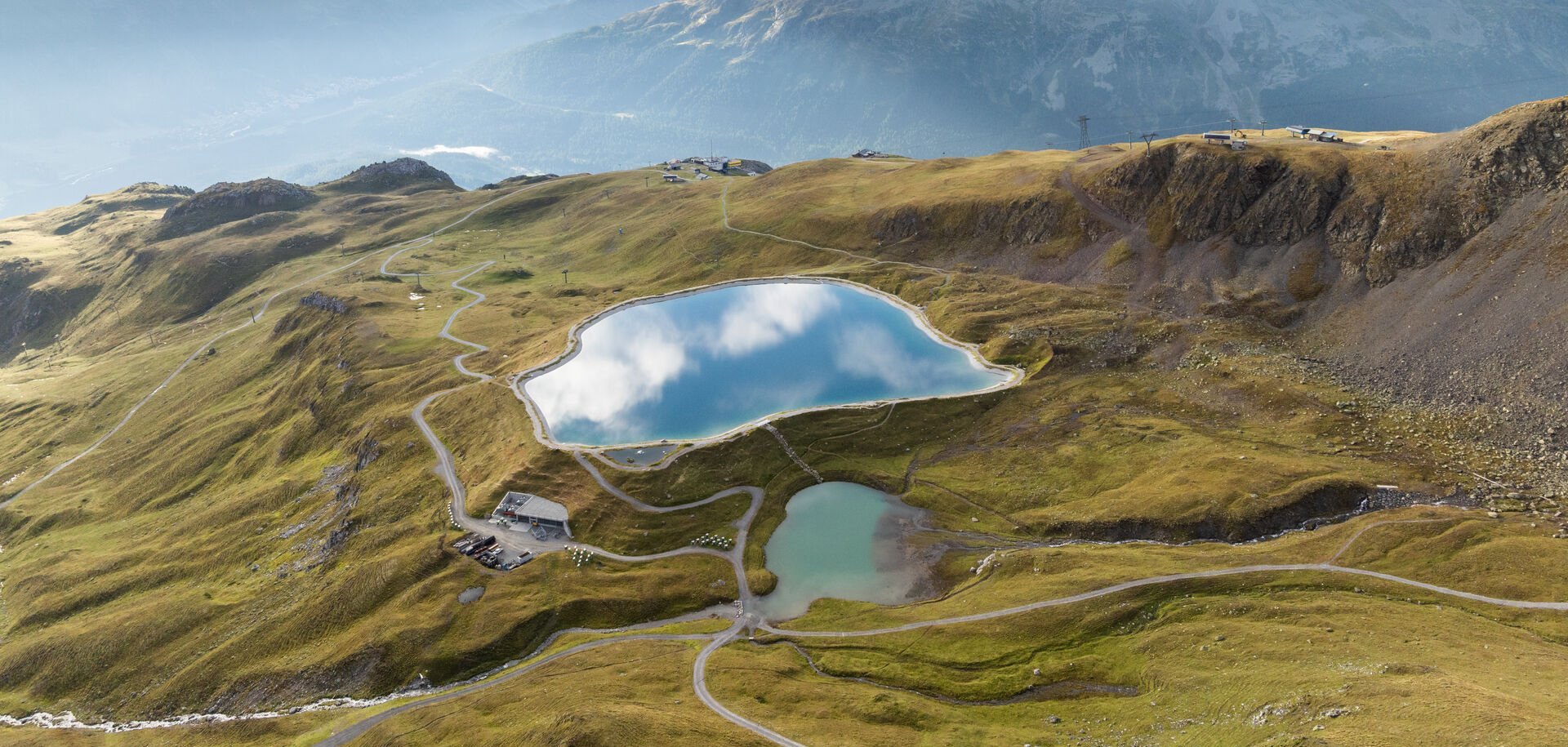
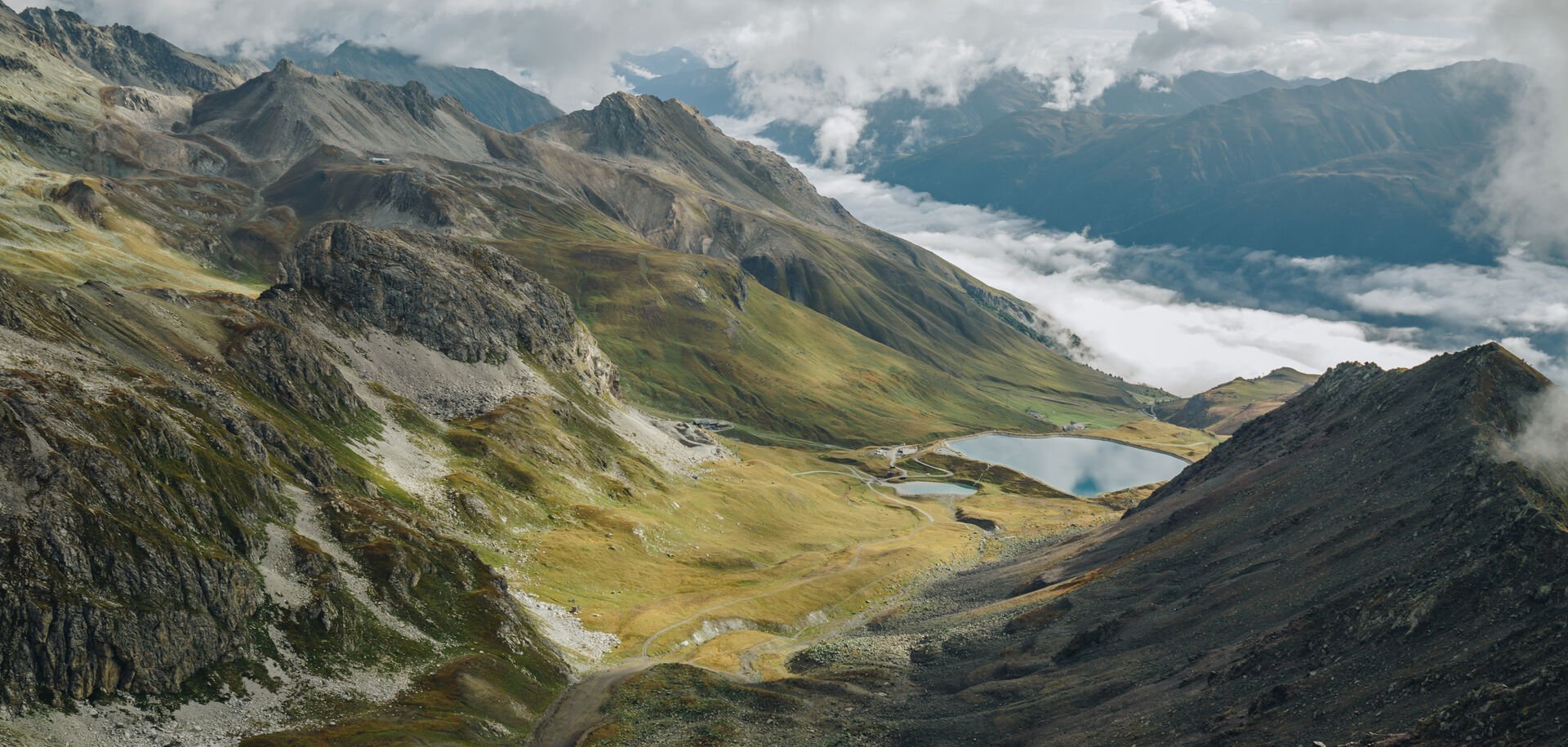
SMALL LAKE, BIG EFFECT
For now, let's briefly explain why the "Lej Nair Pitschen", which translates as "little black lake", is being built.
100 percent snow water recycling
Thanks to the Nair Pitschen natural reservoir as an additional reservoir to the existing Lej Alv natural reservoir, the slopes can be covered exclusively with snowmelt water.
More planning and snow reliability
The snowmelt water is available on the mountain at all times, which shortens the snowmaking time and helps to make the snow sports facilities available as planned.
Conservation of resources
The meltwater is collected on the mountain and no longer has to be pumped up from the valley, which saves electricity, groundwater and money.
Added value for summer visitors
The natural reservoir lake is designed as a local recreation area and opened up for a further mountain experience.
Sustainability
The project investment contributes to securing the livelihood of the Engadin population.
SUMMER 2024
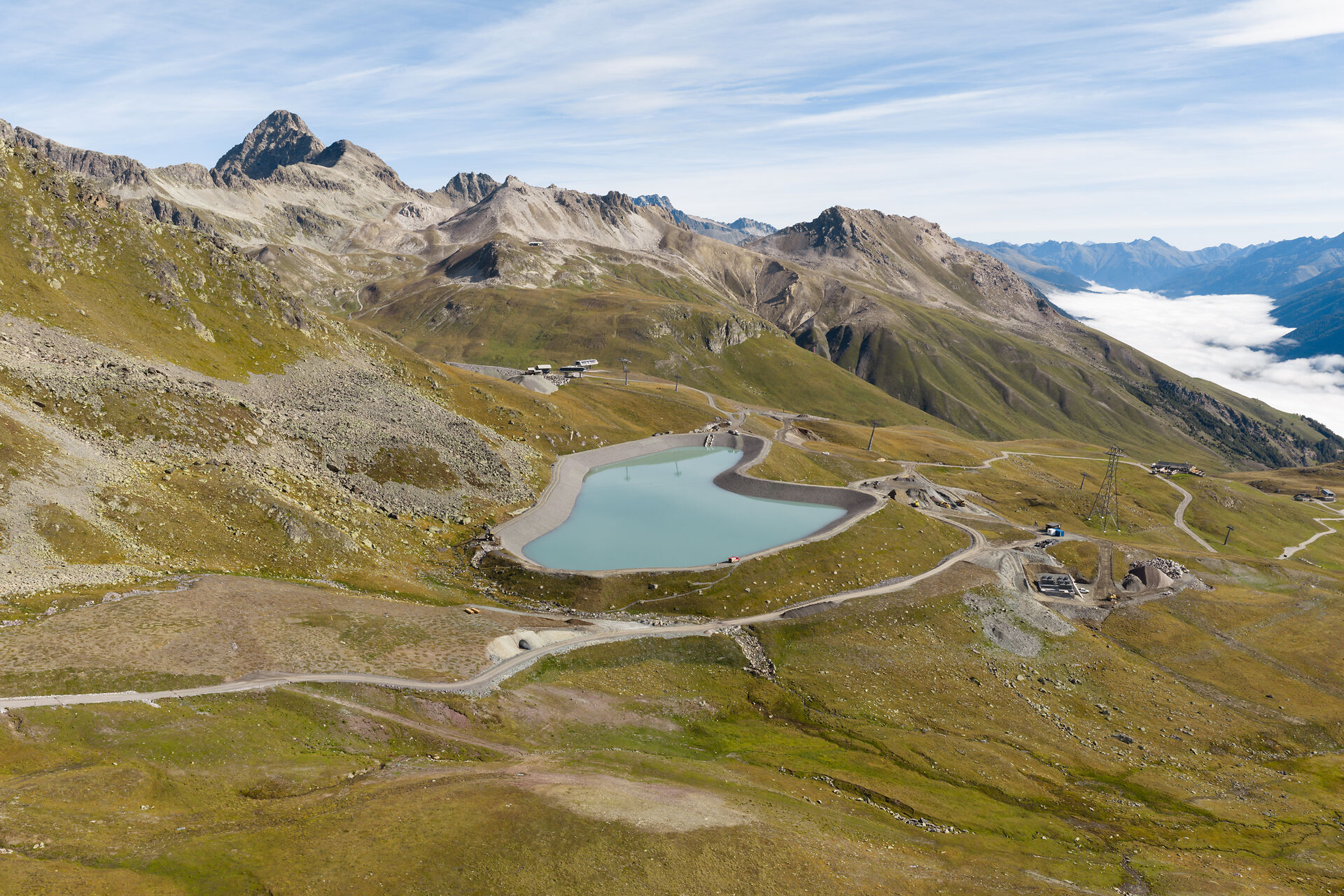
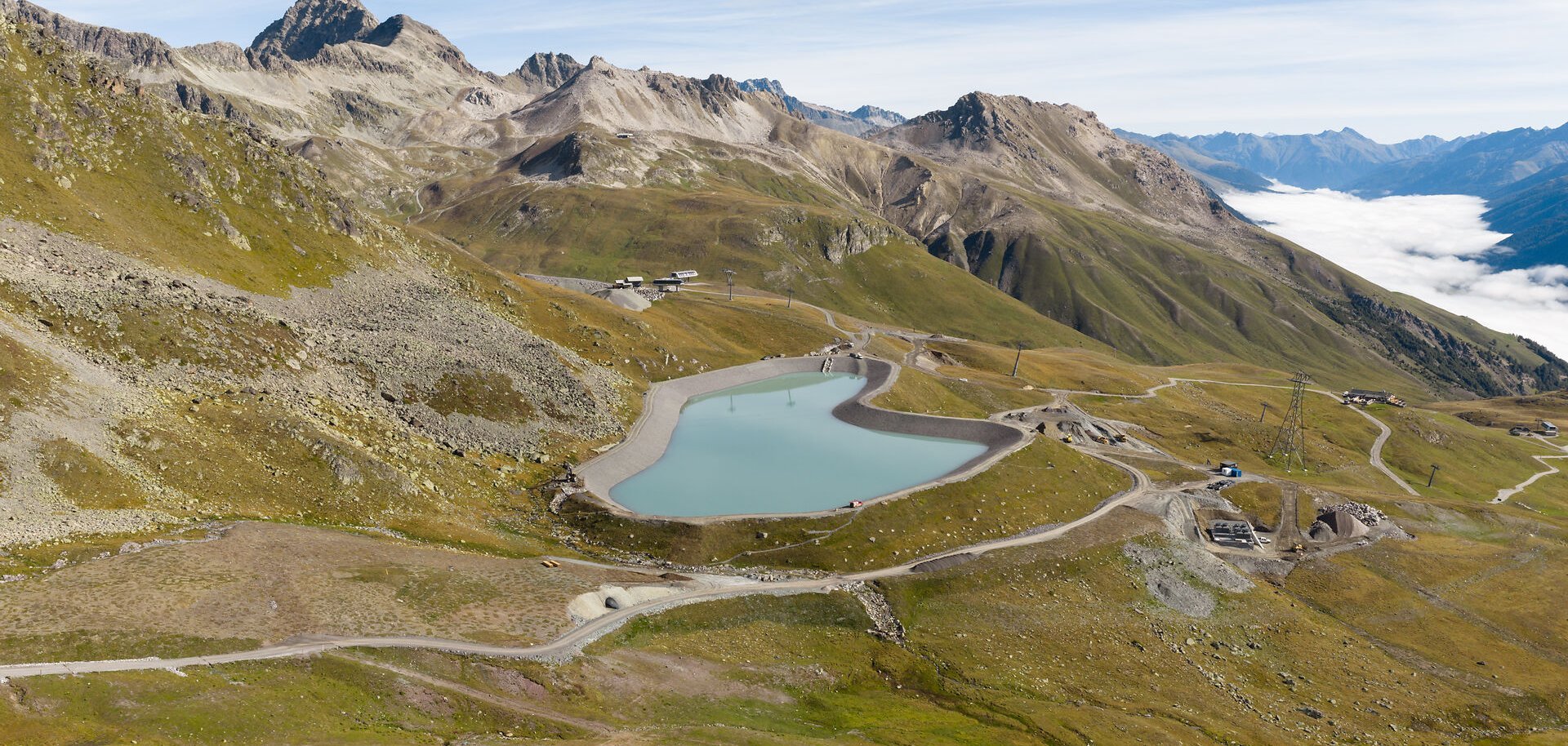
Construction of the Nair Pitschen natural reservoir got off to a successful start in mid-June 2024 with the excavation work. Most of the excavated material was used to build the dam that will border the lake in future.
Particular emphasis was also placed on preserving the existing flora and fauna. The layers of grass were carefully removed and temporarily stored on large metal plates, reminiscent of baking trays, at the appropriate place on the dam. On the same day, the grass layers were carefully replaced in the intended locations. This process can be compared to putting together a large jigsaw puzzle.
The stones of different sizes that were removed were also carefully placed back in place so that, once the work was complete, it was barely visible that the landscape had been altered. Thanks to these measures, the natural environment remains largely untouched and the local flora and fauna are protected as much as possible.
You can follow the progress from mid-June to the end of October 2024 here:
SUMMER 2025
First the dam construction work was completed and the interior of the natural reservoir was ‘lined’ with a layer of gravel. A layer of special foil was then applied to prevent meltwater from seeping away. Finally, another layer of gravel was spread over the foil to create a natural lake bed. Lej Nair Pitschen was then filled so that snowmaking could begin in autumn.
You can follow the completion from mid-July to the end of September 2025 here:
The Nair Pitschen natural reservoir on the Corviglia in St. Moritz is a pioneering project in the Alpine region and secures winter tourism for future generations by recycling meltwater.
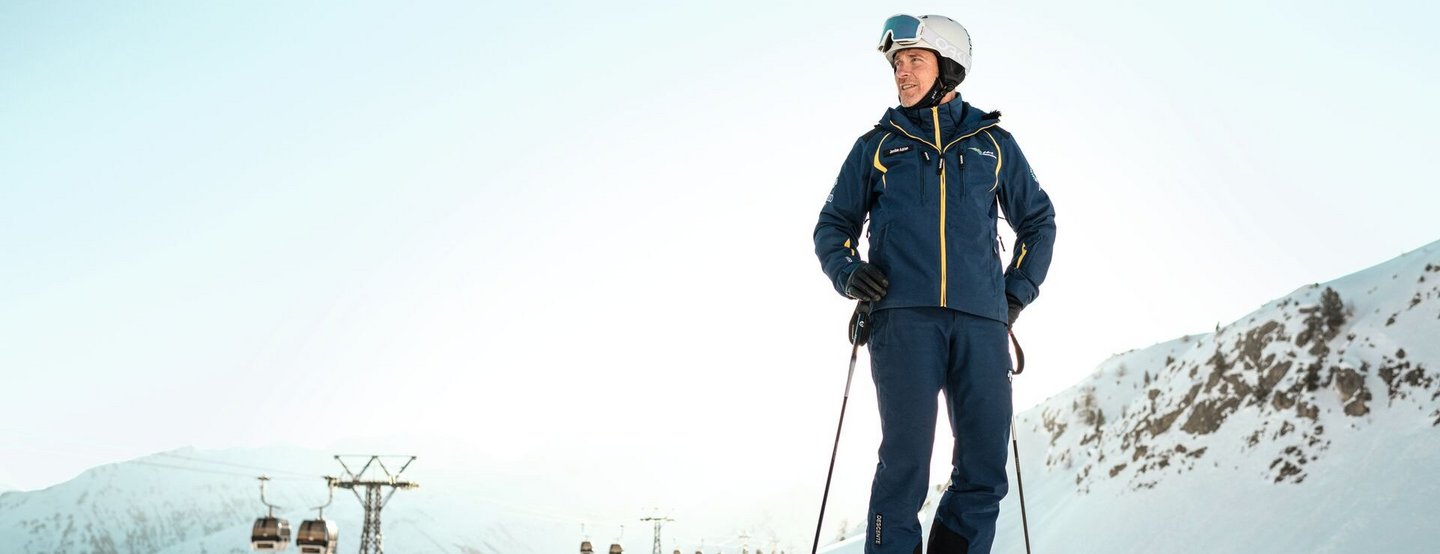
Interview with Adrian Jordan, Head of Snow Sports & Mountain Experiences
He provides exciting insights into and around the major project.
What is the vision behind Mountains' Naturspeichersee Nair Pitschen project?
The driving force behind this project is to continue offering fantastic snow sports on Corviglia in the future, but in a more sustainable, efficient manner with greater planning reliability. Additionally, thanks to the two natural storage lakes, we will be able to fully cover the slopes with recycled snow water. In short, Naturspeichersee Nair Pitschen is a crucial piece for the long-term, sustainable development of the ski area.
Let's briefly touch on snow water recycling. What does it mean?
In winter, we have snow on the mountain, which melts in the spring. We capture the meltwater in the storage basins of the two natural storage lakes, store it over the summer, and use it for snowmaking in the next winter. Snow water recycling thus represents a cycle: water circulates on the mountain. By comparison, in the past decades, we had to pump all the water for snowmaking up the mountain without such a cycle.
The construction of the second natural storage lake is a comprehensive project within the sustainability triangle, i.e., the ecological, economic, and social dimensions. Let's first zoom in on the ecological aspects: What impact does the project have on the other resources used to provide the mountain experience?
Regarding resource use, the second natural storage lake offers several advantages: Since the water is already stored on the mountain, no groundwater needs to be pumped up from the valley—the pumping systems will be dismantled. All the necessary water is available on the mountain at any time, reducing the operating hours needed for snowmaking; thus, we save electricity, water, and money. Moreover, the second natural storage lake will also be designed as a recreational area for guests, similar to the Lej Alv natural storage lake. The Naturspeichersee Nair Pitschen is a true win-win project: it is a good example of how a tourism region can combine gentle resource use with guest benefits.
Economically, the project aims to ensure the long-term survival of the mountain experience on Corviglia. How is this achieved?
The project provides us with even more snow and planning reliability, which are two crucial criteria for us as a tourism region. Thanks to the two natural storage lakes, we will have all the water needed for technical snowmaking on the mountain. As soon as there is a cold window, we can start snow production. We refer to this as the so-called snowmaking time; the time needed to cover the ski area with snow. Many factors depend on this snowmaking time, including the scheduled opening of the ski area, which is highly relevant not only for us but also for the service providers in the valley. Previously, without any natural storage lake, the snowmaking time for the entire Corviglia was several weeks—depending on the water that could be pumped up, electricity, and other factors. With our first natural storage lake, Lej Alv, we were able to significantly shorten the snowmaking time. With the second natural storage lake, Nair Pitschen, we will optimize the cold windows even further, thus shortening the snowmaking time even more. Ultimately, this gives us more planning and snow reliability. Given the climatic changes, this is a crucial advantage for us as a snow sports destination.
What savings are achieved through the Naturspeichersee Nair Pitschen project?
Since we no longer have to pump groundwater up the mountain, we will save about one gigawatt-hour of electricity per year, which is roughly 10% of our company's total energy consumption. To illustrate: one gigawatt-hour corresponds to the annual electricity consumption of about 250 four-person households. Thus, with the second natural storage lake, we achieve a significant reduction in electricity consumption that we could not achieve through pure savings measures. Additionally, we will no longer need groundwater for technical snowmaking.
Let's look to the future in terms of the social dimension of the project: What does the natural storage lake offer future generations?
Our Corviglia ski area covers 155 kilometers of slopes from 1730 meters to 3057 meters above sea level. Various climate scenario studies indicate that ski areas at our altitude will have good to very good snow reliability with a snowmaking system for at least the next 60 years. The second natural storage lake is another important project in our long-term snow sports strategy regarding the offerings for our guests. The Upper Engadine, with its approximately 17,000 inhabitants, is largely dependent on tourism. With this investment in the new natural storage lake, we make a significant contribution to the livelihood of thousands of people living in Engadin, who are directly or indirectly dependent on snow sports tourism.
The groundbreaking for Naturspeichersee Nair Pitschen took place in June. What challenges does the construction bring?
The biggest challenge is the weather: we are building the natural storage lake at around 2600 meters altitude. At such a high-altitude construction site, we always have to expect precipitation in the form of snow. The weather conditions can significantly influence the construction schedule. Therefore, we hope for good, largely precipitation-free weather so that we can proceed as quickly as possible.
And what has been your personal highlight in the project so far?
I was overwhelmed by the great approval of the St. Moritz population for this forward-looking project. 87% of the people who went to the polls believe that the construction of the second natural storage lake is an important project that should be implemented. That is fantastic and motivates us greatly.
LEJ ALV - THE BIG BROTHER
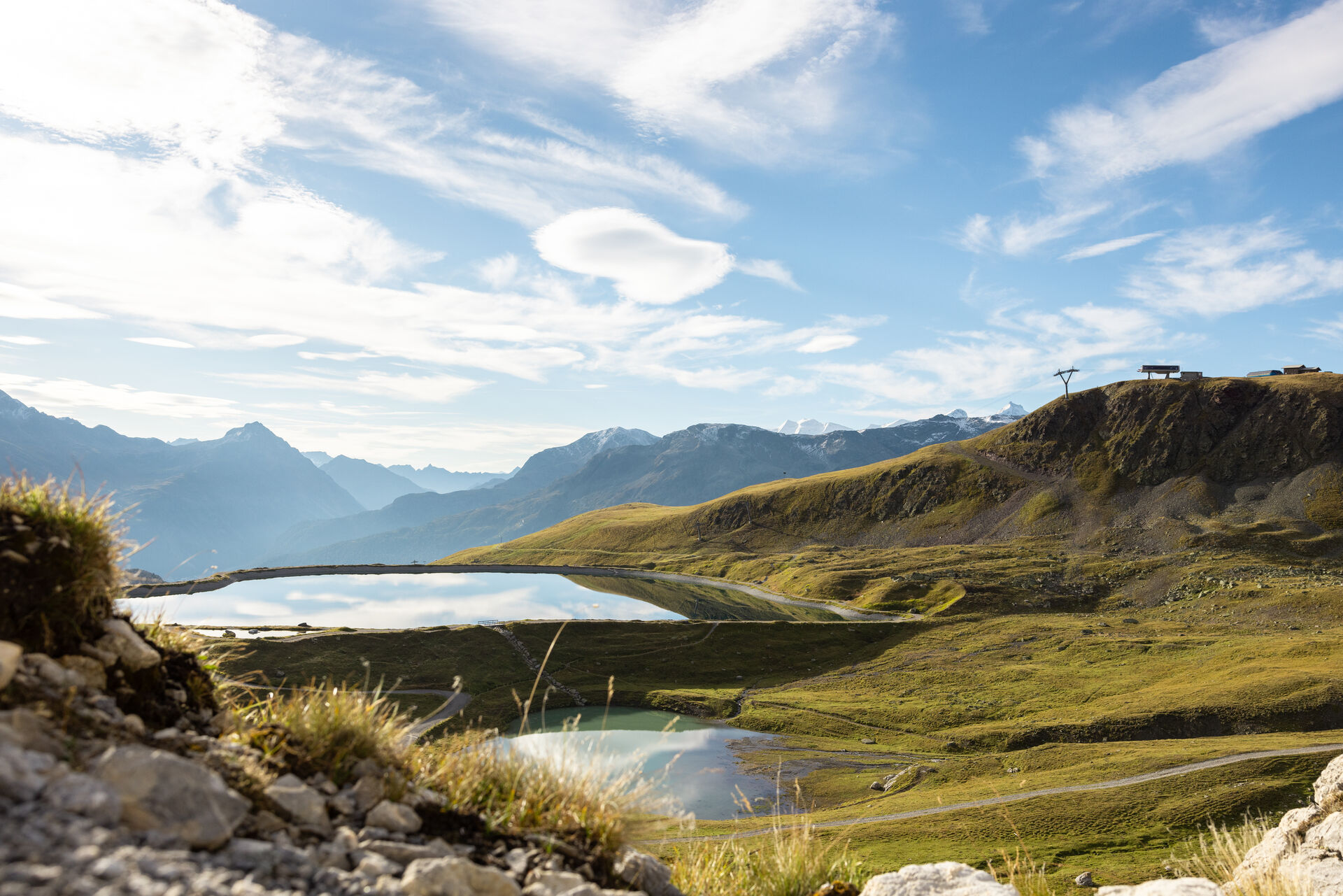
The current natural reservoir lake Lej Alv, the older and bigger brother of Lej Nair Pitschen, is popular for excursions on foot or by bike from summer to autumn. The "white lake" has a volume of around 400,000 cubic meters, which is around 100,000 cubic meters more than its smaller brother. The meltwater used for snowmaking in the ski areas saves the electricity requirements of around 400 households every year. The Lej Nair Pitschen, which is around 60 meters higher, is filled using pumps and pipes already installed from the Lej Alv as soon as it is full of meltwater from winter snow. Here you can learn more about the additional sustainability projects.